Motion Picture Theaters (except Drive-Ins)
Description
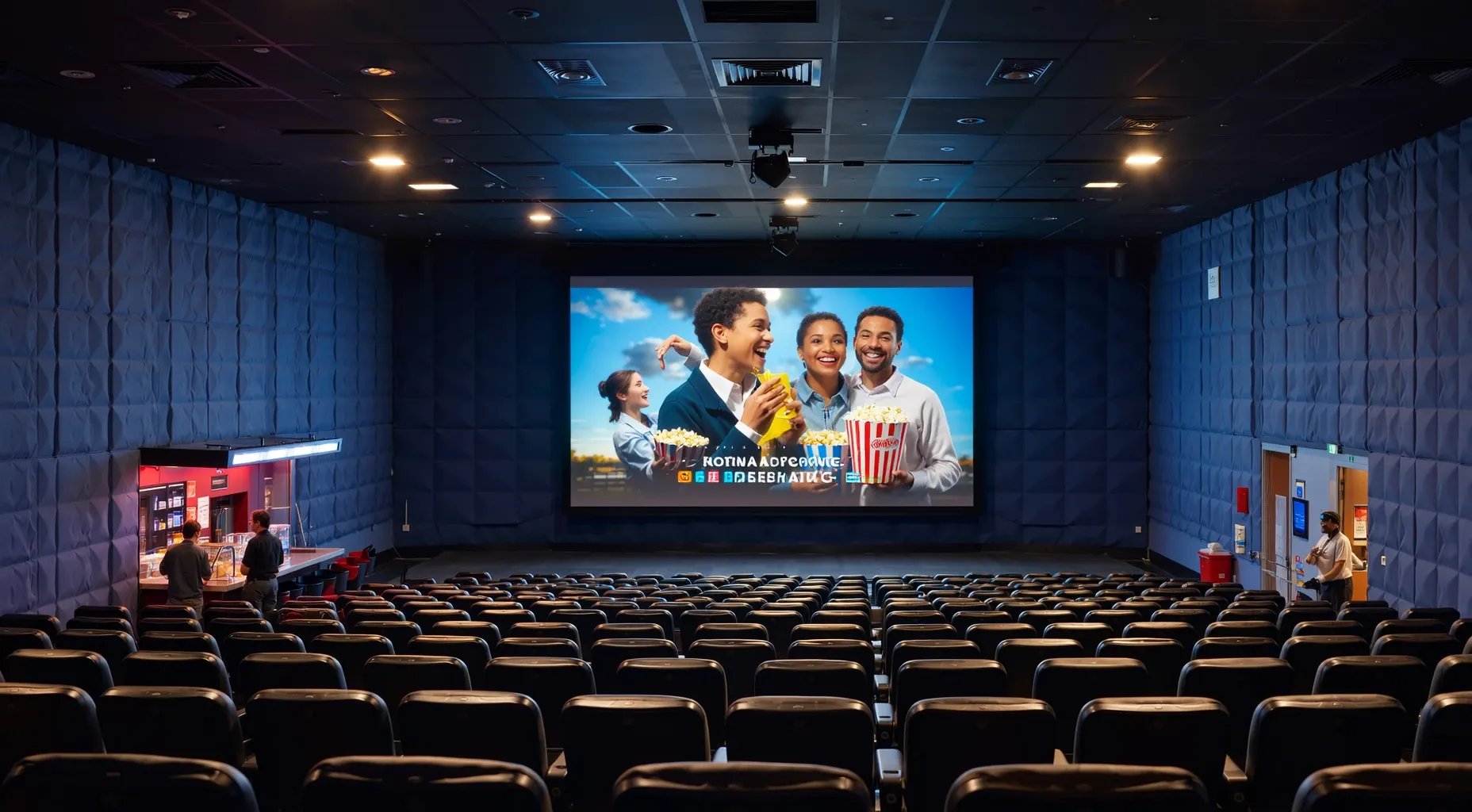
Motion picture theaters serve as the central hubs for experiencing cinematic storytelling in person, creating vital cultural spaces where audiences gather to watch films on large screens. These establishments differ from drive-ins by offering an immersive indoor environment equipped with state-of-the-art projection technology and comfortable seating designed to maximize the viewing experience. Typical business activities include renting out video or digital rights from studios and distributors, screening diverse genres ranging from mainstream blockbusters to independent documentaries, and running concession stands that sell food, beverages, and merchandise. Operators vary widely in scale, from small neighborhood theaters with limited screens to major urban complexes featuring multiple venues and premium seating tiers like recliners or IMAX formats. Beyond standard showings, these venues often host special events such as premieres, retrospectives, and film festival exhibitions that attract niche audiences seeking curated content. Some theaters also expand their scope by selling streaming codes to viewers who cannot attend in person, blurring the lines between physical and digital distribution. Collectively, these operators play a crucial role in sustaining local entertainment economies and preserving the communal atmosphere unique to live cinema events. Their strategic locations often anchor communities, drawing crowds with scheduled matinees and evening programs that fill schedules year-round.
Hierarchy
| Code | Title | Description |
|---|---|---|
| 51 | Information 2-digit sector | The Sector as a Whole The Information sector comprises establishments engaged in the following processes: (a) producing and distributing information and cultural products, (b) providing the means to transmit or distribute these products as well as data or communications, and (c) processing data. The main components of this sector are motion picture and sound recording industries; publishing industries, including software publishing; broadcasting and content providers; telecommunications industries; computing infrastructure providers, data processing, Web hosting, and related services; and Web search portals, libraries, archives, and other information services. The unique characteristics of information and cultural products, and of the processes involved in their production and distribution, distinguish the Information sector from the goods-producing and service-producing sectors. Some of these characteristics are: 1. Unlike traditional goods, an ''information or cultural product,'' such as an online newspaper or a television program, does not necessarily have tangible qualities, nor is it necessarily associated with a particular form. A movie can be viewed at a movie theater or through television broadcast, video-on-demand, or streaming services. A sound recording can be aired on radio, embedded in multimedia products, streamed, or sold at a record store. 2. Unlike traditional services, the delivery of these products does not require direct contact between the supplier and the consumer. 3. The value of these products to the consumer lies in their informational, educational, cultural, or entertainment content, not in the format in which they are distributed. Most of these products are protected from unlawful reproduction by copyright laws. 4. The intangible property aspect of information and cultural products makes the processes involved in their production and distribution very different from goods and services. Only those possessing the rights to these works are authorized to reproduce, alter, improve, and distribute them. Acquiring and using these rights often involves significant costs. In addition, technology has revolutionized the distribution of these products. It is possible to distribute them in a physical form, via broadcast, or online. 5. Distributors of information and cultural products can easily add value to the products they distribute. For instance, broadcasters add advertising not contained in the original product. This capacity means that unlike traditional goods distributors, they derive revenue not from sale of the distributed product to the final consumer, but from those who pay for the privilege of adding information to the original product. Similarly, a directory and mailing list publisher can acquire the rights to thousands of previously published newspaper and periodical articles and add new value by providing search and software and organizing the information in a way that facilitates research and retrieval. These products often command a much higher price than the original information. Excluded from this sector are establishments primarily engaged in custom design of software; mass reproducing software or other prerecorded audio and video material on magnetic or optical media; producing live artistic and cultural works or productions; and performing in or creating artistic and cultural works or productions as independent (i.e., freelance) individuals. |
| 512 | Motion Picture and Sound Recording Industries 3-digit subsector | Industries in the Motion Picture and Sound Recording Industries subsector group establishments involved in the production and distribution of motion pictures and sound recordings. While producers and distributors of motion pictures and sound recordings issue works for sale as traditional publishers do, the processes are sufficiently different to warrant placing establishments engaged in these activities in a separate subsector. Production is typically a complex process that involves several distinct types of establishments that are engaged in activities, such as contracting with performers, creating the film or sound content, and providing technical postproduction services. Film distribution is often to exhibitors, such as theaters and broadcasters, rather than through the wholesale and retail distribution chain. When the product is in a mass-produced form, NAICS treats production and distribution as the major economic activity as it does in the Publishing Industries subsector, rather than as a subsidiary activity to the manufacture of such products. This subsector does not include establishments primarily engaged in the wholesale distribution of video and sound recordings, such as compact discs and audio tapes; these establishments are included in the Wholesale Trade sector. Reproduction of video and sound recordings that is carried out separately from establishments engaged in production and distribution is treated in NAICS as a manufacturing activity. Establishments that primarily acquire the rights to distribute video and sound recordings to the public via television or radio broadcast or streaming distribution services are classified in Subsector 516, Broadcasting and Content Providers. Establishments using facilities and infrastructure that they operate to distribute cable and satellite television subscription programming are included in Subsector 517, Telecommunications. |
| 5121 | Motion Picture and Video Industries 4-digit industry group | This industry group comprises establishments primarily engaged in the production and/or distribution of motion pictures, videos, television programs, or commercials; in the exhibition of motion pictures; or in the provision of postproduction and related services. |
| 51213 | Motion Picture and Video Exhibition 5-digit NAICS industry | This industry comprises establishments primarily engaged in operating motion picture theaters and/or exhibiting motion pictures or videos at film festivals, and so forth. |
| 512131 | Motion Picture Theaters (except Drive-Ins) 6-digit U.S. detail | Motion picture theaters serve as the central hubs for experiencing cinematic storytelling in person, creating vital cultural spaces where audiences gather to watch films on large screens. These establishments differ from drive-ins by offering an immersive indoor environment equipped with state-of-the-art projection technology and comfortable seating designed to maximize the viewing experience. Typical business activities include renting out video or digital rights from studios and distributors, screening diverse genres ranging from mainstream blockbusters to independent documentaries, and running concession stands that sell food, beverages, and merchandise. Operators vary widely in scale, from small neighborhood theaters with limited screens to major urban complexes featuring multiple venues and premium seating tiers like recliners or IMAX formats. Beyond standard showings, these venues often host special events such as premieres, retrospectives, and film festival exhibitions that attract niche audiences seeking curated content. Some theaters also expand their scope by selling streaming codes to viewers who cannot attend in person, blurring the lines between physical and digital distribution. Collectively, these operators play a crucial role in sustaining local entertainment economies and preserving the communal atmosphere unique to live cinema events. Their strategic locations often anchor communities, drawing crowds with scheduled matinees and evening programs that fill schedules year-round. |
Need a supply chain stack that maps to this industry?
Use this NAICS classification as the starting point, then connect it to Item workflows across inventory, warehousing, order management, fulfillment, and transportation.
Index Items
Cinemas
Film festivals exhibitors
Motion picture exhibition
Motion picture exhibitors for airlines
Motion picture exhibitors, itinerant
Motion picture theaters, indoor
Movie theaters (except drive-in)
Theaters, motion picture (except drive-in)
Theaters, motion picture, indoor
How Item Can Help
Item.com's Warehouse Management System optimizes inventory levels for physical copies of films, ensuring theaters have the right media readily available while reducing storage costs.
The Order Management System streamlines ticket purchasing by integrating with local booking platforms to instantly confirm seat availability and process payments without manual intervention.
Advanced analytics tools analyze ticket sales patterns to predict customer preferences, enabling theaters to dynamically adjust movie pricing and create personalized marketing campaigns for patrons.
External Resources
Census.gov NAICS Detail
Official US Census Bureau definition and scope for NAICS 512131.
Amateur Motion Picture Association
Trade association representing independent theaters and filmmakers.
National Association of Theater Owners
Industry group providing advocacy, resources, and certification for cinema operators.
U.S. Department of Commerce, Economic Census
Government statistical directory defining and categorizing motion picture theater businesses.
