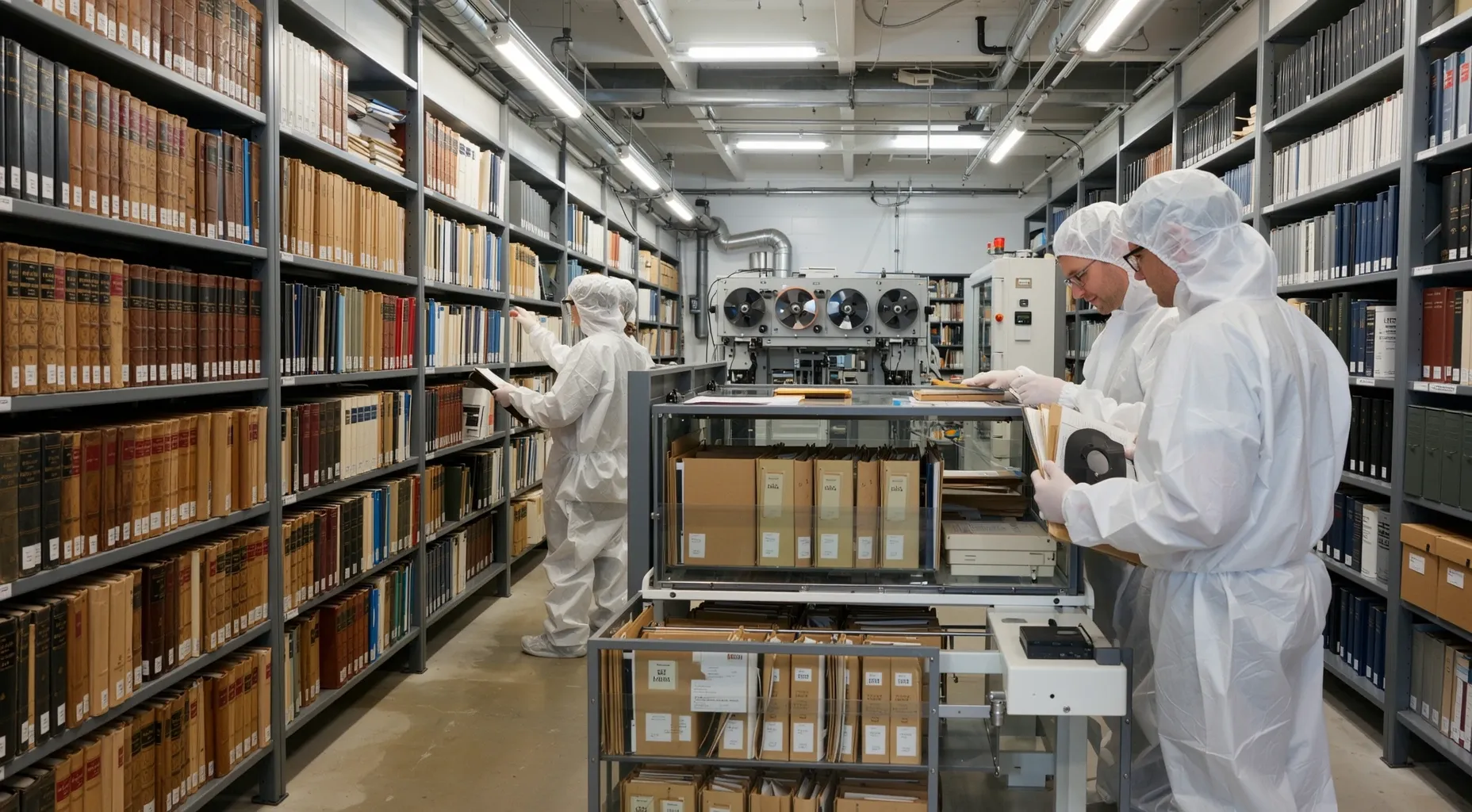
Libraries and Archives
Description
This industry comprises establishments primarily engaged in providing library or archive services. These establishments are engaged in maintaining collections of documents (e.g., books, journals, newspapers, and music) and facilitating the use of such documents (recorded information regardless of its physical form and characteristics) as required to meet the informational, research, educational, or recreational needs of their user. These establishments may also acquire, research, store, preserve, and generally make accessible to the public historical documents, photographs, maps, audio material, audiovisual material, and other archival material of historical interest. All or portions of these collections may be accessible electronically.
Hierarchy
| Code | Title | Description |
|---|---|---|
| 51 | Information 2-digit sector | The Sector as a Whole The Information sector comprises establishments engaged in the following processes: (a) producing and distributing information and cultural products, (b) providing the means to transmit or distribute these products as well as data or communications, and (c) processing data. The main components of this sector are motion picture and sound recording industries; publishing industries, including software publishing; broadcasting and content providers; telecommunications industries; computing infrastructure providers, data processing, Web hosting, and related services; and Web search portals, libraries, archives, and other information services. The unique characteristics of information and cultural products, and of the processes involved in their production and distribution, distinguish the Information sector from the goods-producing and service-producing sectors. Some of these characteristics are: 1. Unlike traditional goods, an ''information or cultural product,'' such as an online newspaper or a television program, does not necessarily have tangible qualities, nor is it necessarily associated with a particular form. A movie can be viewed at a movie theater or through television broadcast, video-on-demand, or streaming services. A sound recording can be aired on radio, embedded in multimedia products, streamed, or sold at a record store. 2. Unlike traditional services, the delivery of these products does not require direct contact between the supplier and the consumer. 3. The value of these products to the consumer lies in their informational, educational, cultural, or entertainment content, not in the format in which they are distributed. Most of these products are protected from unlawful reproduction by copyright laws. 4. The intangible property aspect of information and cultural products makes the processes involved in their production and distribution very different from goods and services. Only those possessing the rights to these works are authorized to reproduce, alter, improve, and distribute them. Acquiring and using these rights often involves significant costs. In addition, technology has revolutionized the distribution of these products. It is possible to distribute them in a physical form, via broadcast, or online. 5. Distributors of information and cultural products can easily add value to the products they distribute. For instance, broadcasters add advertising not contained in the original product. This capacity means that unlike traditional goods distributors, they derive revenue not from sale of the distributed product to the final consumer, but from those who pay for the privilege of adding information to the original product. Similarly, a directory and mailing list publisher can acquire the rights to thousands of previously published newspaper and periodical articles and add new value by providing search and software and organizing the information in a way that facilitates research and retrieval. These products often command a much higher price than the original information. Excluded from this sector are establishments primarily engaged in custom design of software; mass reproducing software or other prerecorded audio and video material on magnetic or optical media; producing live artistic and cultural works or productions; and performing in or creating artistic and cultural works or productions as independent (i.e., freelance) individuals. |
| 519 | Web Search Portals, Libraries, Archives, and Other Information Services 3-digit subsector | Industries in the Web Search Portals, Libraries, Archives, and Other Information Services subsector group establishments supplying information, storing and providing access to information, searching and retrieving information, and operating Web sites that use search engines to allow for searching information on the Internet. The main components of the subsector are libraries, archives, and Web search portals. |
| 5192 | Web Search Portals, Libraries, Archives, and Other Information Services 4-digit industry group | Industries in the Web Search Portals, Libraries, Archives, and Other Information Services subsector group establishments supplying information, storing and providing access to information, searching and retrieving information, and operating Web sites that use search engines to allow for searching information on the Internet. The main components of the subsector are libraries, archives, and Web search portals. |
| 51921 | Libraries and Archives 5-digit NAICS industry | See industry description for 519210. |
| 519210 | Libraries and Archives 6-digit U.S. detail | This industry comprises establishments primarily engaged in providing library or archive services. These establishments are engaged in maintaining collections of documents (e.g., books, journals, newspapers, and music) and facilitating the use of such documents (recorded information regardless of its physical form and characteristics) as required to meet the informational, research, educational, or recreational needs of their user. These establishments may also acquire, research, store, preserve, and generally make accessible to the public historical documents, photographs, maps, audio material, audiovisual material, and other archival material of historical interest. All or portions of these collections may be accessible electronically. |
Need a supply chain stack that maps to this industry?
Use this NAICS classification as the starting point, then connect it to Item workflows across inventory, warehousing, order management, fulfillment, and transportation.
Classification References
- 01Providing stock film and video footage (via motion picture and video tape libraries) to the media, multimedia, and advertising industries--are classified in U.S. Industry 512199, Other Motion Picture and Video Industries;
- 02Providing stock music to the media, multimedia, and advertising industries--are classified in Industry 512290, Other Sound Recording Industries;
- 03Providing stock photos to the media, multimedia, and advertising industries--are classified in Industry 519290, Web Search Portals and All Other Information Services; and
- 04Acquiring distribution rights and distributing motion pictures and videos to motion picture theaters, television networks and stations, other media broadcast and streaming outlets, and exhibitors--are classified in Industry 512120, Motion Picture and Video Distribution.
Index Items
Archives
Bookmobiles
Centers for documentation (i.e., archives)
Circulating libraries
Film archives
Lending libraries
Libraries (except motion picture stock footage, motion picture commercial distribution)
Motion picture film libraries, archives
Music archives
Reference libraries
How Item Can Help
The Warehouse Management System optimizes library storage layouts to maximize space for rare or heavy collection items while streamlining the check-out and interlibrary loan process.
Order Management Systems integrate seamlessly with catalog databases to handle complex transactions like bulk preservation processing requests or multi-branch item transfers efficiently.
Transportation Management Tools provide real-time tracking and route optimization for moving fragile or time-sensitive materials between libraries, museums, and archive repositories.
External Resources
Census.gov NAICS Detail
Official US Census Bureau definition and scope for NAICS 519210.
American Libraries Association
Leading trade association for the library industry in the United States.
National Archives and Records Administration
U.S. government agency responsible for preserving national records.
Directory of Federal Agencies
Official page providing information about the federal government's archival services.
