其他混凝土产品制造
Description
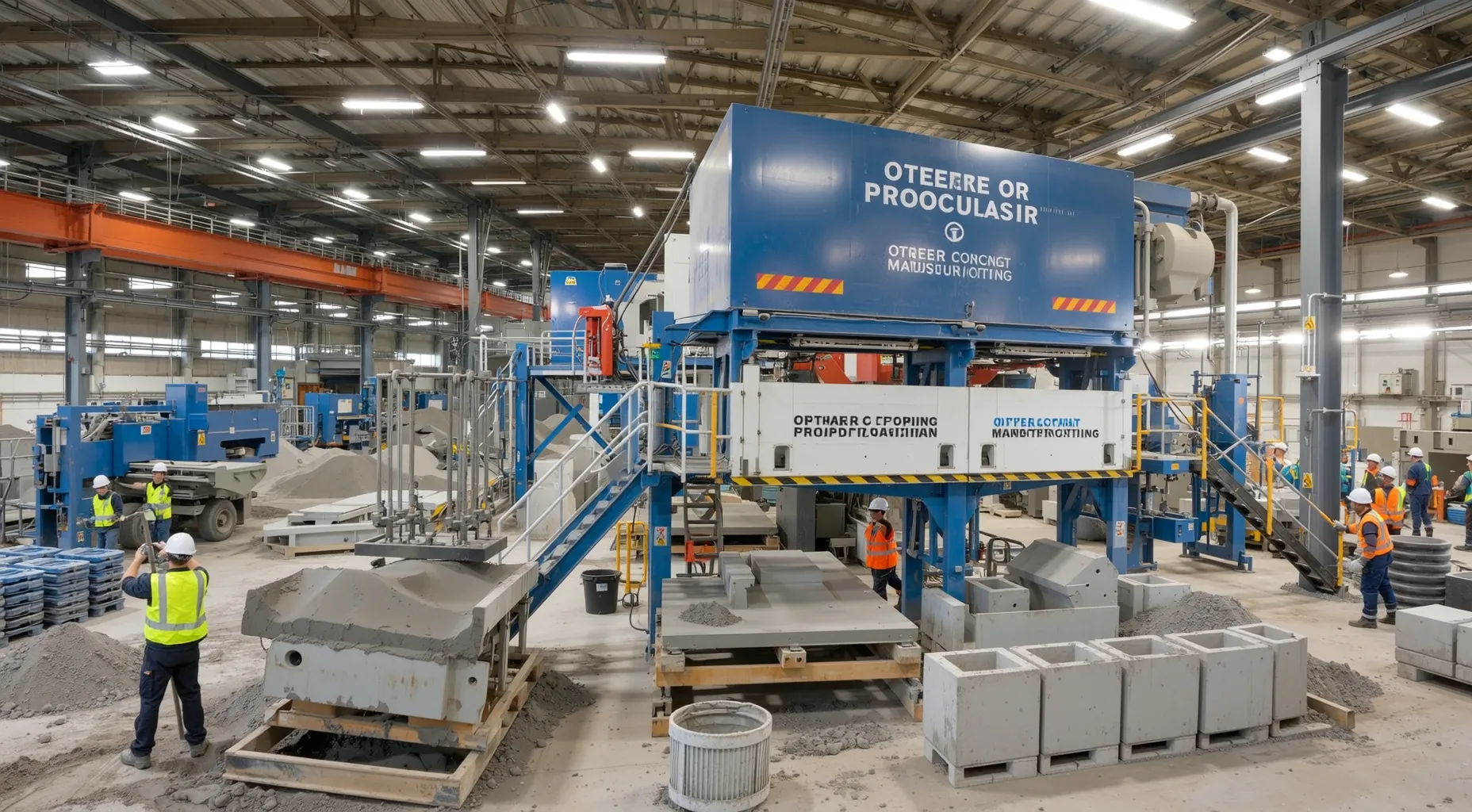
该行业的企业专注于生产不属于混凝土块、砖或管的混凝土产品。典型的运营涉及混合原材料,如波特兰水泥、骨料和水,以创建从建筑板材到用于建筑项目的特殊预制面板的各种形状。这些设施通常采用模具、固化和表面处理技术,以确保结构完整性和美观性,然后再交付。操作者范围从小型家庭拥有的工作坊,专注于定制住宅组件,到大型工业公司,为全国提供基础设施需求。规模差异很大,有些场所作为利基制造商,生产特定的建筑元素,而另一些场所则作为高容量生产中心,为商业开发商提供服务。范围涵盖了各种市场,包括住房、轻型商业建筑和公共工程。许多这些企业都整合了供应链,以本地采购原材料,但又以区域或国际范围销售成品。制造过程强调精确工程和质量控制,以满足不同客户对尺寸、重量和承载能力的各种规格。该领域在现代建筑中发挥着至关重要的作用,为建筑和基础设施发展提供耐用、多功能的建筑材料,以支持临时结构和永久基础设施在城市和农村地区的建设。
Hierarchy
| Code | Title | Description |
|---|---|---|
| 32 | Manufacturing 2-digit sector | The Sector as a Whole The Manufacturing sector comprises establishments engaged in the mechanical, physical, or chemical transformation of materials, substances, or components into new products. The assembling of component parts of manufactured products is considered manufacturing, except in cases where the activity is appropriately classified in Sector 23, Construction. Establishments in the Manufacturing sector are often described as plants, factories, or mills and characteristically use power-driven machines and material handling equipment. However, establishments that transform materials or substances into new products by hand or in the worker's home and those engaged in selling to the general public products made on the same premises from which they are sold, such as bakeries, candy stores, and custom tailors, may also be included in this sector. Manufacturing establishments may process materials or may contract with other establishments to process their materials for them. Both types of establishments are included in manufacturing. Selected industries in the Manufacturing sector are comprised solely of establishments that process materials for other establishments on a contract or fee basis. Beyond these dedicated contract manufacturing industries, establishments that process materials for other establishments are generally classified in the Manufacturing industry of the processed materials. The materials, substances, or components transformed by manufacturing establishments are raw materials that are products of agriculture, forestry, fishing, mining, or quarrying as well as products of other manufacturing establishments. The materials used may be purchased directly from producers, obtained through customary trade channels, or secured without recourse to the market by transferring the product from one establishment to another, under the same ownership. The new product of a manufacturing establishment may be finished in the sense that it is ready for utilization or consumption, or it may be semi-finished to become an input for an establishment engaged in further manufacturing. For example, the product of the alumina refinery is the input used in the primary production of aluminum; primary aluminum is the input to an aluminum wire drawing plant; and aluminum wire is the input for a fabricated wire product manufacturing establishment. The subsectors in the Manufacturing sector generally reflect distinct production processes related to material inputs, production equipment, and employee skills. In the machinery area, where assembling is a key activity, parts and accessories for manufactured products are classified in the industry of the finished manufactured item when they are made for separate sale. For example, an attachment for a piece of metalworking machinery would be classified with metalworking machinery. However, component inputs from other manufacturing establishments are classified based on the production function of the component manufacturer. For example, electronic components are classified in Subsector 334, Computer and Electronic Product Manufacturing, and stampings are classified in Subsector 332, Fabricated Metal Product Manufacturing. Manufacturing establishments often perform one or more activities that are classified outside the Manufacturing sector of NAICS. For instance, almost all manufacturing has some captive research and development or administrative operations, such as accounting, payroll, or management. These captive services are treated the same as captive manufacturing activities. When the services are provided by separate establishments, they are classified in the NAICS sector where such services are primary, not in manufacturing. The boundaries of manufacturing and the other sectors of the classification system can be somewhat blurry. The establishments in the Manufacturing sector are engaged in the transformation of materials into new products. Their output is a new product. However, the definition of what constitutes a new product can be somewhat subjective. As clarification, the following activities are considered manufacturing in NAICS: <table width=100%><tr><td width=10%> </td><td><dl><dt style='padding-left: 10px; text-indent: -10px;'>Milk bottling and pasteurizing;</dt><dt style='padding-left: 10px; text-indent: -10px;'>Water bottling and processing;</dt><dt style='padding-left: 10px; text-indent: -10px;'>Fresh fish packaging (oyster<br/> shucking, fish filleting);</dt><dt style='padding-left: 10px; text-indent: -10px;'>Apparel jobbing (assigning<br/> materials to contract<br/> factories or shops for<br/> fabrication or other contract<br/> operations) as well as<br/> contracting on materials<br/> owned by others;</dt><dt style='padding-left: 10px; text-indent: -10px;'>Printing and related activities;</dt><dt style='padding-left: 10px; text-indent: -10px;'>Ready-mix concrete production;</dt><dt style='padding-left: 10px; text-indent: -10px;'>Leather converting;</dt><dt style='padding-left: 10px; text-indent: -10px;'>Grinding lenses to<br/> prescription;</dt><dt style='padding-left: 10px; text-indent: -10px;'>Wood preserving;</dt><dt style='padding-left: 10px; text-indent: -10px;'>Lapidary work for the trade;</dt></dl></td><td width=10%> </td><td><dl><dt style='padding-left: 10px; text-indent: -10px;'>Electroplating, plating, metal<br/> heat treating, and<br/> polishing for the trade;</dt><dt style='padding-left: 10px; text-indent: -10px;'>Fabricating signs and<br/> advertising displays;</dt><dt style='padding-left: 10px; text-indent: -10px;'>Rebuilding or remanufacturing<br/> machinery (i.e., automotive<br/> parts);</dt><dt style='padding-left: 10px; text-indent: -10px;'>Making manufactured homes<br/> (i.e., mobile homes) or<br/> prefabricated buildings,<br/> whether or not assembling/<br/> erecting at the customers'<br/> site;</dt><dt style='padding-left: 10px; text-indent: -10px;'>Ship repair and renovation;</dt><dt style='padding-left: 10px; text-indent: -10px;'>Machine shops; and</dt><dt style='padding-left: 10px; text-indent: -10px;'>Tire retreading.</dt></dl></td><td width=10%> </td></tr></table> Conversely, there are activities that are sometimes considered manufacturing, but which for NAICS are classified in another sector (i.e., not classified as manufacturing). They include: 1. Logging, classified in Sector 11, Agriculture, Forestry, Fishing and Hunting, is considered a harvesting operation; 2. Beneficiating ores and other minerals, classified in Sector 21, Mining, Quarrying, and Oil and Gas Extraction, is considered part of the activity of mining; 3. Constructing structures, assembling prefabricated buildings, and fabricating at the construction site by contractors are classified in Sector 23, Construction; 4. Breaking bulk and reselling in smaller lots, including packaging, repackaging, or bottling products, such as liquors or chemicals; assembling and selling computers on a custom basis; sorting and reselling scrap; mixing and selling paints to customer order; and cutting metals to customer order for resale are classified in Sector 42, Wholesale Trade, or Sector 44-45, Retail Trade; and 5. Publishing and the combined activity of publishing and printing, classified in Sector 51, Information, transform information into a product for which the value to the consumer lies in the information content, not in the format in which it is distributed (i.e., the book or software compact disc). |
| 327 | Cement and Concrete Product Manufacturing 3-digit subsector | This industry group comprises establishments primarily engaged in one of the following: (1) manufacturing Portland, natural, masonry, pozzolanic, and other hydraulic cements; (2) acting as batch or mixing plants, manufacturing concrete delivered to a purchaser in a plastic and unhardened state; (3) manufacturing concrete pipe, brick, and block; or (4) manufacturing other concrete products (except block, brick, and pipe). |
| 3273 | Other Concrete Product Manufacturing 4-digit industry group | See industry description for 327390. |
| 32739 | Other Concrete Product Manufacturing 5-digit NAICS industry | This industry group comprises establishments primarily engaged in one of the following: (1) manufacturing Portland, natural, masonry, pozzolanic, and other hydraulic cements; (2) acting as batch or mixing plants, manufacturing concrete delivered to a purchaser in a plastic and unhardened state; (3) manufacturing concrete pipe, brick, and block; or (4) manufacturing other concrete products (except block, brick, and pipe). |
| 327390 | 其他混凝土产品制造 6-digit U.S. detail | 该行业的企业专注于生产不属于混凝土块、砖或管的混凝土产品。典型的运营涉及混合原材料,如波特兰水泥、骨料和水,以创建从建筑板材到用于建筑项目的特殊预制面板的各种形状。这些设施通常采用模具、固化和表面处理技术,以确保结构完整性和美观性,然后再交付。操作者范围从小型家庭拥有的工作坊,专注于定制住宅组件,到大型工业公司,为全国提供基础设施需求。规模差异很大,有些场所作为利基制造商,生产特定的建筑元素,而另一些场所则作为高容量生产中心,为商业开发商提供服务。范围涵盖了各种市场,包括住房、轻型商业建筑和公共工程。许多这些企业都整合了供应链,以本地采购原材料,但又以区域或国际范围销售成品。制造过程强调精确工程和质量控制,以满足不同客户对尺寸、重量和承载能力的各种规格。该领域在现代建筑中发挥着至关重要的作用,为建筑和基础设施发展提供耐用、多功能的建筑材料,以支持临时结构和永久基础设施在城市和农村地区的建设。 |
Need a supply chain stack that maps to this industry?
Use this NAICS classification as the starting point, then connect it to Item workflows across inventory, warehousing, order management, fulfillment, and transportation.
Classification References
- 01生产混凝土块和砖--归类于美国行业 327331,混凝土块和砖生产;以及
- 02生产混凝土管道--归类于美国行业 327332,混凝土管道生产。
Index Items
建筑墙板、预制混凝土、生产
墓碑、混凝土和预制 terrazzo、生产
石材、混凝土(不含结构)、生产
烟囱帽、混凝土、生产
混凝土家具(例如,长凳、桌子)生产
混凝土产品、预制(不含块、砖和管)、生产
混凝土储罐生产
边缘、混凝土、生产
垃圾焚烧炉、预制混凝土、生产
花园家具、预制混凝土、生产
梁和桁架、预应力混凝土、生产
梁、预应力混凝土、生产
焚烧炉、预制混凝土、生产
门楣、混凝土、生产
装饰和雕塑预制混凝土产品生产
电线杆、混凝土、生产
柱、混凝土、生产
预制混凝土产品(不含砖、块、管)生产
预应力混凝土产品(不含块、砖、管)生产
屋顶瓦、混凝土、生产
门框、混凝土、生产
储罐、混凝土、生产
terrazzo 产品、预制(不含砖、块和管)、生产
铁路连接件、混凝土、生产
How Item Can Help
Manages complex stock levels for varied concrete products like driveways and precast panels by tracking batch weights, cure times, and expiration dates to prevent spoilage.
Analyzes historical production data to predict material usage fluctuations and optimize inventory replenishment, reducing waste from overstocked or understocked inventory.
Consolidates diverse customer orders for customized concrete projects to streamline dispatch planning and enable real-time visibility across the fulfillment network.
Item.com Tools
External Resources
Census.gov NAICS Detail
Official US Census Bureau definition and scope for NAICS 327390.
American Concrete Association
A leading global trade association providing resources, research, and advocacy for the concrete industry.
US Bureau of Labor Statistics - Manufacturing of Concrete
Official government data on employment statistics and wage trends for the concrete manufacturing sector.
NAICS 327390 Industry Directory
A comprehensive list of private companies classified under Other Concrete Product Manufacturing in the United States.
