All Other Pipeline Transportation
Description
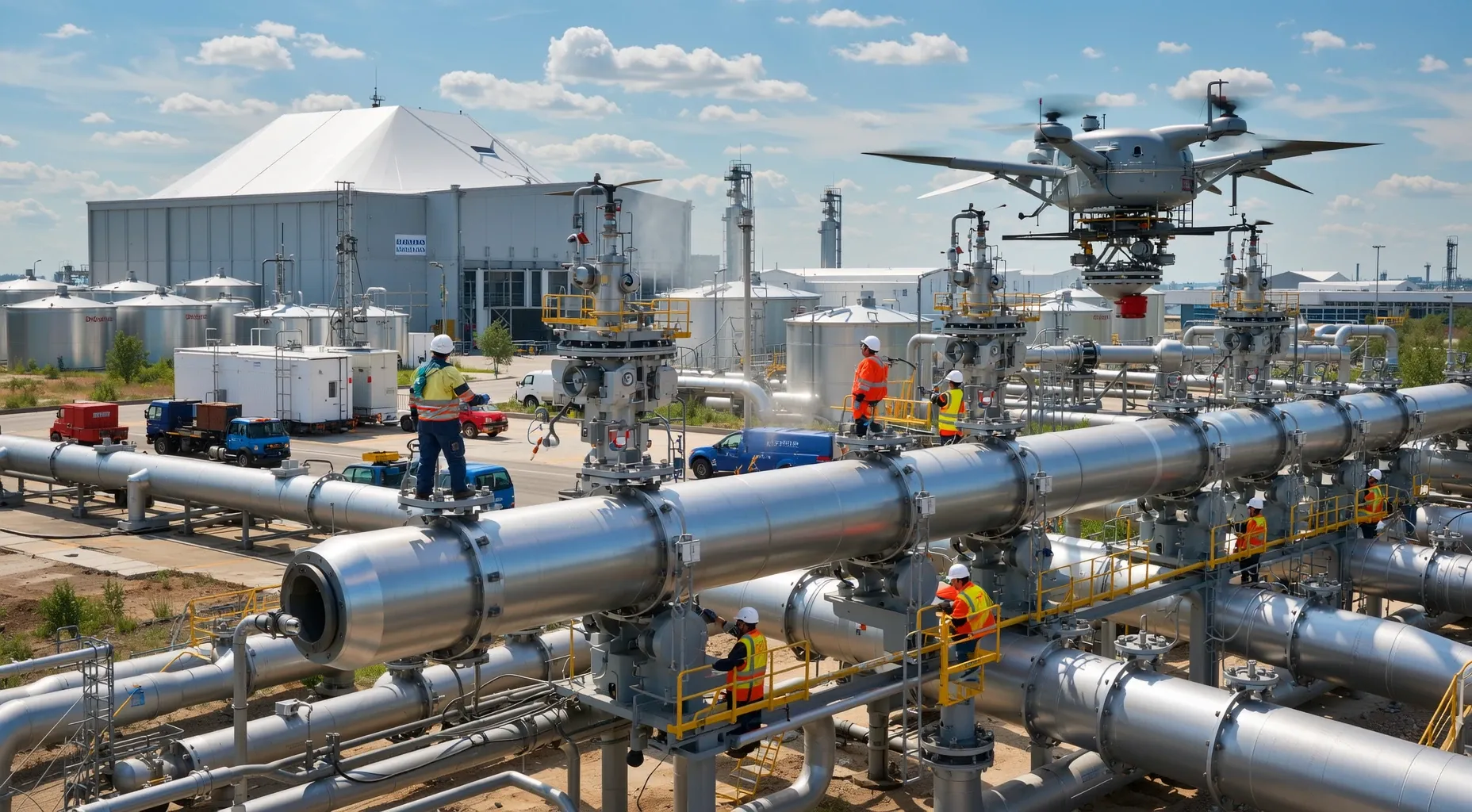
Establishments in the All Other Pipeline Transportation sector focus on moving hazardous and non-liquid commodities through dedicated pipeline networks, operating outside the primary crude oil, natural gas, and refined petroleum markets. These operators manage critical infrastructure for a diverse array of industrial materials including industrial gases, liquid and gaseous refrigerants, chemicals, coal, asphalt, cement, and solid waste. Typical business activities involve the design, construction, and operation of high-pressure or low-pressure pipelines, as well as the maintenance of pumping and compression stations required to keep products flowing over long distances. The industry relies heavily on advanced monitoring systems to ensure the safe transport of volatile substances and to comply with strict regulatory safety standards. Operators often specialize in niche product lines, ranging from medical oxygen and anesthesia gases to industrial hydrocarbons and bulk food products. While many facilities serve regional distribution networks connecting factories to processing plants or end-users, some corporations manage extensive interstate systems that traverse multiple states. The scale of operations varies significantly, with small municipal systems serving specific communities alongside massive inter-city networks transporting millions of pounds of commodities annually. This sector plays a vital role in modern supply chains by providing efficient, automated, and secure alternatives to trucking and rail for certain industrial goods.
Hierarchy
| Code | Title | Description |
|---|---|---|
| 48 | Transportation and Warehousing 2-digit sector | The Sector as a Whole The Transportation and Warehousing sector includes industries providing transportation of passengers and cargo, warehousing and storage for goods, scenic and sightseeing transportation, and support activities related to modes of transportation. Establishments in these industries use transportation equipment or transportation-related facilities as a productive asset. The type of equipment depends on the mode of transportation. The modes of transportation are air, rail, water, road, and pipeline. The Transportation and Warehousing sector distinguishes three basic types of activities: subsectors for each mode of transportation, a subsector for warehousing and storage, and a subsector for establishments providing support activities for transportation. In addition, there are subsectors for establishments that provide passenger transportation for scenic and sightseeing purposes, postal services, and courier services. A separate subsector for support activities is established in the sector because, first, support activities for transportation are inherently multimodal, such as freight transportation arrangement, or have multimodal aspects. Secondly, there are production process similarities among the support activity industries. One of the support activities identified in the Support Activities for Transportation subsector is the routine repair and maintenance of transportation equipment (e.g., aircraft at an airport, railroad rolling stock at a railroad terminal, or ships at a harbor or port facility). Such establishments do not perform complete overhauling or rebuilding of transportation equipment (i.e., periodic restoration of transportation equipment to original design specifications) or transportation equipment conversion (i.e., major modification to systems). An establishment that primarily performs factory (or shipyard) overhauls, rebuilding, or conversions of aircraft, railroad rolling stock, or ships is classified in Subsector 336, Transportation Equipment Manufacturing, according to the type of equipment. Many of the establishments in this sector often operate on networks, with physical facilities, labor forces, and equipment spread over an extensive geographic area. Warehousing establishments in this sector are distinguished from merchant wholesaling in that the warehouse establishments do not sell the goods. Excluded from this sector are establishments primarily engaged in providing travel agent, travel arrangement, and reservation services that support transportation establishments, hotels, other businesses, and government agencies. These establishments are classified in Sector 56, Administrative and Support and Waste Management and Remediation Services. Establishments primarily engaged in providing rental and leasing of transportation equipment without operator are classified in Subsector 532, Rental and Leasing Services. Establishments primarily engaged in providing medical care with transportation are classified in Sector 62, Health Care and Social Assistance. |
| 486 | Pipeline Transportation 3-digit subsector | Industries in the Pipeline Transportation subsector use transmission pipelines to transport products, such as crude oil, natural gas, refined petroleum products, and slurry. Industries are identified based on the products transported (i.e., pipeline transportation of crude oil, natural gas, refined petroleum products, and other products). The Pipeline Transportation of Natural Gas industry includes the storage of natural gas because the storage is usually done by the pipeline establishment and because a pipeline is inherently a network in which all the nodes are interdependent. |
| 4869 | Other Pipeline Transportation 4-digit industry group | This industry group comprises establishments primarily engaged in the pipeline transportation of products (except crude oil and natural gas). |
| 48699 | All Other Pipeline Transportation 5-digit NAICS industry | See industry description for 486990. |
| 486990 | All Other Pipeline Transportation 6-digit U.S. detail | Establishments in the All Other Pipeline Transportation sector focus on moving hazardous and non-liquid commodities through dedicated pipeline networks, operating outside the primary crude oil, natural gas, and refined petroleum markets. These operators manage critical infrastructure for a diverse array of industrial materials including industrial gases, liquid and gaseous refrigerants, chemicals, coal, asphalt, cement, and solid waste. Typical business activities involve the design, construction, and operation of high-pressure or low-pressure pipelines, as well as the maintenance of pumping and compression stations required to keep products flowing over long distances. The industry relies heavily on advanced monitoring systems to ensure the safe transport of volatile substances and to comply with strict regulatory safety standards. Operators often specialize in niche product lines, ranging from medical oxygen and anesthesia gases to industrial hydrocarbons and bulk food products. While many facilities serve regional distribution networks connecting factories to processing plants or end-users, some corporations manage extensive interstate systems that traverse multiple states. The scale of operations varies significantly, with small municipal systems serving specific communities alongside massive inter-city networks transporting millions of pounds of commodities annually. This sector plays a vital role in modern supply chains by providing efficient, automated, and secure alternatives to trucking and rail for certain industrial goods. |
Need a supply chain stack that maps to this industry?
Use this NAICS classification as the starting point, then connect it to Item workflows across inventory, warehousing, order management, fulfillment, and transportation.
Classification References
- 01Providing pipeline transportation of crude oil--are classified in Industry 486110, Pipeline Transportation of Crude Oil;
- 02Providing pipeline transportation of natural gas--are classified in Industry 486210, Pipeline Transportation of Natural Gas;
- 03Providing pipeline transportation of refined petroleum products--are classified in Industry 486910, Pipeline Transportation of Refined Petroleum Products; and
- 04Operating water distribution systems--are classified in Industry 221310, Water Supply and Irrigation Systems.
Index Items
Booster pumping station (except natural gas, petroleum)
Coal pipeline transportation
Pipeline transportation (except crude oil, natural gas, refined petroleum products)
Slurry pipeline transportation
How Item Can Help
Item.com's Warehouse Management System optimizes storage and retrieval for hazardous materials, ensuring strict safety protocols and accurate inventory levels across distributed pipeline assets.
The Order Management System provides real-time visibility into fuel demand and delivery schedules, allowing businesses to adjust logistics dynamically based on fluctuating market conditions.
By leveraging predictive analytics, Data Intelligence identifies potential pipeline leaks or corrosion risks before they occur, minimizing downtime and maintaining regulatory compliance.
Item.com Tools
External Resources
Census.gov NAICS Detail
Official US Census Bureau definition and scope for NAICS 486990.
Pipeline and Hazardous Materials Safety Act
USPHST provides the official regulations and guidelines for the transportation of hazardous materials by pipeline in the United States.
Petroleum Equipment Manufacturers Association
PEMA offers industry resources and reports specifically focused on pipeline transportation technology and maintenance.
Pipeline.org
Pipeline.org publishes research and publications covering the full spectrum of pipeline transportation including integrity management and environmental impact.
