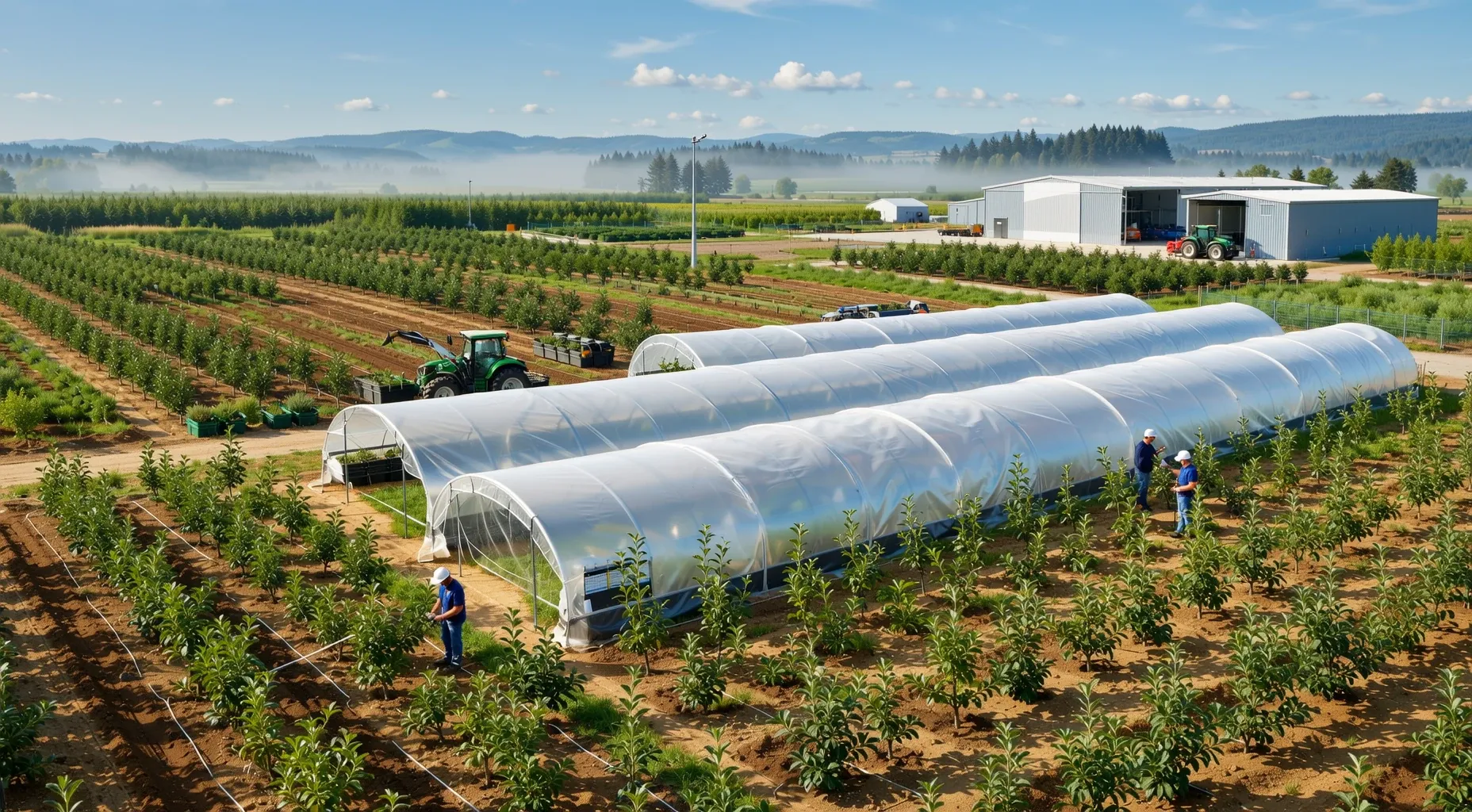
Pflanzenzucht und Baumpflege
Beschreibung
Diese US-Branche umfasst Betriebe, die sich hauptsächlich mit (1) dem Anbau von Pflanzenzuchtwaren, Zierpflanzen, Sträuchern, Zwiebeln, Obstpflanzen, Rasen und ähnlichem, unter Dach oder auf offenen Feldern und/oder (2) dem Anbau von kurzzyklischen Laubbäumen mit einem Wachstums- und Erntezyklus von 10 Jahren oder weniger für Papier oder Baumstämme beschäftigen.
Hierarchie
| Code | Titel | Beschreibung |
|---|---|---|
| 11 | Land-, Forst- und Fischerei sowie Jagd 2-stelliger Sektor | Der Sektor als Ganzes Der Sektor Land-, Forst-, Fischerei- und Jagdwirtschaft umfasst Betriebe, die hauptsächlich mit dem Anbau von Feldfrüchten, der Tierhaltung, der Holzernte sowie der Ernte von Fischen und anderen Tieren aus einem Bauernhof, einer Ranch oder ihren natürlichen Lebensräumen befasst sind. Die Betriebe in diesem Sektor werden oft als Bauernhöfe, Ranchs, Milchviehanlagen, Gewächshäuser, Baumschulen, Obstgärten oder Brutstätten beschrieben. Ein Bauernhof kann aus einem einzigen Grundstück oder aus mehreren separaten Grundstücken bestehen, die unter unterschiedlichen Pachtverhältnissen gehalten werden. Beispielsweise kann ein Grundstück vom Betreiber des Hofes besessen und ein anderes gemietet sein. Er kann allein vom Betreiber oder mit Hilfe von Haushaltsmitgliedern oder Angestellten betrieben werden, oder er kann von einer Partnerschaft, einer Gesellschaft oder einer anderen Art von Organisation betrieben werden. Wenn ein Landbesitzer einen oder mehrere Pächter, Mieter, Anbauer oder Verwalter hat, gilt das von jedem betriebene Land als Bauernhof. Der Sektor unterscheidet zwei grundlegende Tätigkeiten: die landwirtschaftliche Produktion und die landwirtschaftlichen Unterstützungsleistungen. Die landwirtschaftliche Produktion umfasst Betriebe, die den gesamten Betrieb eines Bauernhofs oder einer Ranch durchführen, wie beispielsweise selbstständige Landwirte und Pächterlandwirte. Die landwirtschaftlichen Unterstützungsleistungen umfassen Betriebe, die eine oder mehrere Tätigkeiten im Zusammenhang mit dem Hofbetrieb ausführen, wie z. B. Bodenbearbeitung, Aussaat, Ernte und Bewirtschaftung, auf Vertrags- oder Honorarbasis. Von der Land-, Forst-, Fischerei- und Jagdwirtschaft sind Betriebe ausgeschlossen, die sich hauptsächlich mit landwirtschaftlicher Forschung befassen (z. B. Versuchsanbaubetriebe) und staatliche Einrichtungen, die sich hauptsächlich mit der Verwaltung von Programmen zur Regulierung und Erhaltung der Land-, Mineral-, Wildtier- und Forstnutzung befassen. Diese Betriebe werden bzw. in der Branche 54171, Forschung und Entwicklung in den Natur-, Ingenieur- und Lebenswissenschaften; und in der Branche 92412, Verwaltung von Naturschutzprogrammen, klassifiziert. |
| 111 | Ernteproduktion 3-stelliger Teilsektor | Die Industrien im Untersektor der Pflanzenproduktion bauen hauptsächlich Nahrungsmittel und Fasern an. Der Untersektor umfasst Betriebe wie landwirtschaftliche Betriebe, Obstgärten, Weinberge, Gewächshäuser und Baumschulen, die sich hauptsächlich mit dem Anbau von Pflanzen, Kulturen, Weinreben oder Bäumen und deren Samen befassen. Die Industrien in diesem Untersektor werden nach Ähnlichkeit der Produktionstätigkeit gruppiert, einschließlich biologischer und physiologischer Merkmale sowie wirtschaftlicher Anforderungen, der Dauer der Vegetationsperiode, des Grades der Fruchtfolge, des Umfangs der Input-Spezialisierung, des Arbeitskräftebedarfs und des Kapitalbedarfs. Der Produktionsprozess ist typischerweise abgeschlossen, wenn das Rohprodukt oder die Ware, die angebaut wurde, den „Hofausgang“ für den Markt erreicht, d. h. am Punkt des ersten Verkaufs oder der Preisbestimmung. Betriebe werden im Untersektor der Pflanzenproduktion klassifiziert, wenn der Pflanzenanbau (d. h. der Wert der Pflanzen für den Markt) ein halbes oder mehr der gesamten landwirtschaftlichen Produktion des Betriebs ausmacht. Innerhalb des Untersektors werden Betriebe in einer bestimmten Industrie klassifiziert, wenn ein Produkt oder eine Produktfamilie (d. h. Ölsaat- und Getreideanbau, Gemüse- und Melonenanbau, Obst- und Nussbaumkulturen) ein halbes oder mehr der landwirtschaftlichen Produktion des Betriebs ausmacht. Betriebe mit einem halben oder mehr Pflanzenanbau, bei denen kein Produkt oder keine Produktfamilie einer Industrie ein halbes der landwirtschaftlichen Produktion des Betriebs ausmacht, werden als allgemeiner Mischkulturanbau behandelt und in Industrie 11199, Sonstige Pflanzenbau, eingestuft. Die Industrien im Untersektor der Pflanzenproduktion umfassen Betriebe, die besitzen, betreiben und verwalten, sowie solche, die nur betreiben und verwalten. Diejenigen, die nur verwalten, werden im Untersektor 115, Unterstützende Tätigkeiten für Land- und Forstwirtschaft, klassifiziert. Betriebe, die Wasserpflanzen in kontrollierten oder ausgewählten aquatischen Umgebungen züchten, werden im Untersektor 112, Tierhaltung und Aquakultur, klassifiziert. |
| 1114 | Gewächshaus-, Pflanzen- und Blumenkulturproduktion 4-stellige Branchengruppe | Diese Industriegruppe umfasst Betriebe, die sich hauptsächlich mit dem Anbau von Pflanzen jeglicher Art unter Abdeckung und/oder dem Anbau von Setzlingen und Blumen beschäftigen. „Unter Abdeckung“ wird im Allgemeinen als Gewächshäuser, Frosttunnel, Folientunnel und Lattenhäuser definiert. Die angebauten Pflanzen werden in verschiedenen Reifegraden geerntet und haben jährliche und mehrjährige Lebenszyklen. Die Setzlinge umfassen kurzzyklische holzige Kulturen mit Wachstumszyklen von 10 Jahren oder weniger. |
| 11142 | Pflanzenzucht und Floristikproduktion 5-stellige NAICS-Branche | Diese Branche umfasst Betriebe, die sich hauptsächlich mit (1) dem Anbau von Zierpflanzen und Blumen (z. B. Jungpflanzen, Sträucher, Schnittblumen, Blumensamen, Blattpflanzen) unter Abdeckung oder auf offenen Feldern und/oder (2) dem Anbau von kurzzyklischen Laubhölzern mit einem Wachstums- und Erntezyklus von 10 Jahren oder weniger für Zellstoff oder Baummaterial (z. B. Schnitttannen, Pappeln) beschäftigen. |
| 111421 | Pflanzenzucht und Baumpflege 6-stelliger US-Detailcode | Diese US-Branche umfasst Betriebe, die sich hauptsächlich mit (1) dem Anbau von Pflanzenzuchtwaren, Zierpflanzen, Sträuchern, Zwiebeln, Obstpflanzen, Rasen und ähnlichem, unter Dach oder auf offenen Feldern und/oder (2) dem Anbau von kurzzyklischen Laubbäumen mit einem Wachstums- und Erntezyklus von 10 Jahren oder weniger für Papier oder Baumstämme beschäftigen. |
Benötigen Sie eine Supply-Chain-Plattform, die zu dieser Branche passt?
Nutzen Sie diese NAICS-Klassifizierung als Ausgangspunkt und verbinden Sie sie anschließend mit Item-Workflows für Bestand, Lager, Auftragsverwaltung, Fulfillment und Transport.
Klassifizierungsreferenzen
- 01Zucht von Gemüse- und Melonenpflanzen für Anbauflächen – werden in der Branche 11121, Gemüse- und Melonenanbau, klassifiziert;
- 02Betrieb von Waldflächen (d. h. Anbauzyklus von mehr als 10 Jahren) – werden in der Branche 113110, Betrieb von Waldflächen, klassifiziert;
- 03Einzelhandel mit Pflanzen, Baummaterial und Blumenprodukten, die hauptsächlich von anderen gekauft werden – werden in der Branche 444240, Baumschulen, Gartencenter und Landwirtschaftsbedarfshändler, klassifiziert;
- 04Großhandel mit Pflanzen- und Saatgut, das hauptsächlich von anderen gekauft wird – werden in der Branche 424910, Großhändler für landwirtschaftliche Betriebsmittel, klassifiziert; und
- 05Großhandel mit Pflanzenmaterial (außer Saatgut und Pflanzenzwiebeln), das hauptsächlich von anderen gekauft wird – werden in der Branche 424930, Großhändler für Blumen, Pflanzenmaterial und Floristenbedarf, klassifiziert.
Indexeinträge
Azaleenanzucht
Weihnachtsbaumzucht
Knollenanbau
Feldgärtnereien (d.h. Zucht von Blumen und Sträuchern)
Blumenzwiebelzucht
Obstbaumschulung (z.B. Pflanzen, Setzlinge, Bäume)
Zucht von krautigen Stauden
Gärtnereiwarenproduktion
Gärtnerei mit Baumproduktion (außer Wiederaufforstung)
Vorbeimpfte Mattenanbau
Vermehrungsmaterialanbau
Rosenbuschzucht
Kurzzyklische Holzpflanzenzucht (d.h. Zucht- und Erntezyklus von zehn Jahren oder weniger)
Strauchzucht
Rasenmattenanbau
Gewebekulturanbau
Baumkulturanbau (außer Forstwirtschaft), kurzzyklische Zucht und Ernte
Kunstdämmmattenanbau
Wie Item helfen kann
Analysiert Klimadaten und Pflanzenwachstumszyklen, um den Erntezeitpunkt vorherzusagen und so eine proaktive Ressourcenzuweisung sowie eine Reduzierung von Abfällen bei hochwertigen Setzlingen zu ermöglichen.
Item.com-Tools
Externe Ressourcen
Census.gov NAICS-Details
Offizielle Definition und Geltungsbereich des US Census Bureau für NAICS 111421.
Nationaler Verband der Hausbauer
Bietet Ressourcen und Schulungen für Wohnungsbauunternehmer, einschließlich Verweise auf Baumschul- und Baumproduktionsdienste.
Landwirtschaftsministerium der Vereinigten Staaten
Offizielle Regierungsseite mit Daten, Vorschriften und Lehrmaterialien zur Gartenbau- und Baumproduktion.
National Arbor Foundation
Ein führender Branchenverband, der sich für die Gesundheit und das Wachstum von Bäumen einsetzt und Ressourcen für Baumschulen und Baumproduzenten anbietet.
