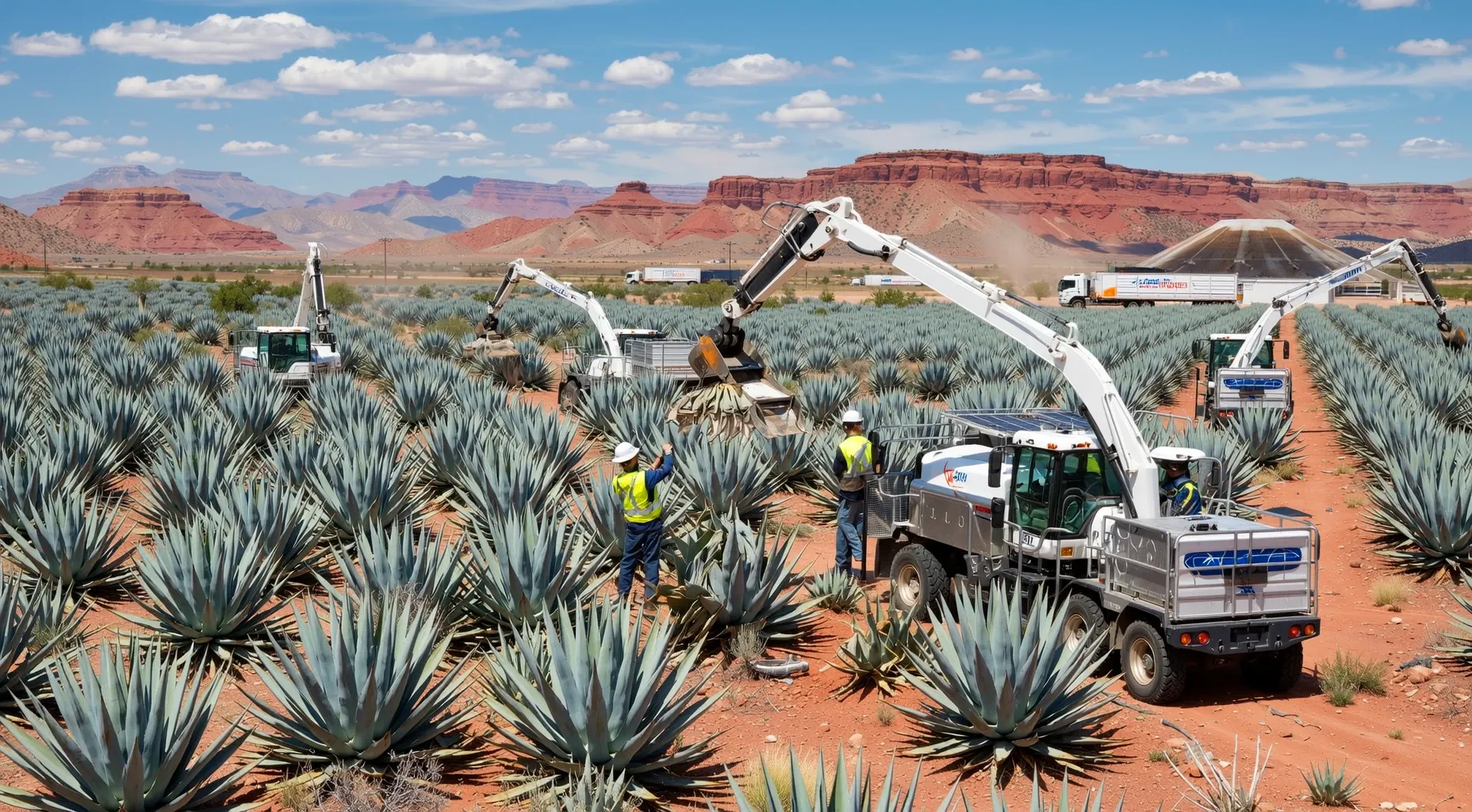
All Other Miscellaneous Crop Farming
Description
This U.S. industry comprises establishments primarily engaged in one of the following: (1) growing crops (except oilseeds and/or grains; vegetables and/or melons; fruits and/or tree nuts; greenhouse, nursery, and/or floriculture products; tobacco; cotton; sugarcane; hay; sugar beets; or peanuts); (2) growing a combination of crops (except a combination of oilseed(s) and grain(s); and a combination of fruit(s) and tree nut(s)) with no one crop or family of crops accounting for one-half of the establishment's agricultural production (i.e., value of crops for market); or (3) gathering tea or maple sap. Illustrative Examples: Agave farming Mint farming General combination crop farming (except oilseed and grain; vegetables and melons; fruit and tree nut combinations) Hay seed farming Grass seed farming Hop farming Spice farming
Hierarchy
| Code | Title | Description |
|---|---|---|
| 11 | Agriculture, Forestry, Fishing and Hunting 2-digit sector | The Sector as a Whole The Agriculture, Forestry, Fishing and Hunting sector comprises establishments primarily engaged in growing crops, raising animals, harvesting timber, and harvesting fish and other animals from a farm, ranch, or their natural habitats. The establishments in this sector are often described as farms, ranches, dairies, greenhouses, nurseries, orchards, or hatcheries. A farm may consist of a single tract of land or a number of separate tracts which may be held under different tenures. For example, one tract may be owned by the farm operator and another rented. It may be operated by the operator alone or with the assistance of members of the household or hired employees, or it may be operated by a partnership, corporation, or other type of organization. When a landowner has one or more tenants, renters, croppers, or managers, the land operated by each is considered a farm. The sector distinguishes two basic activities: agricultural production and agricultural support activities. Agricultural production includes establishments performing the complete farm or ranch operation, such as farm owner-operators and tenant farm operators. Agricultural support activities include establishments that perform one or more activities associated with farm operation, such as soil preparation, planting, harvesting, and management, on a contract or fee basis. Excluded from the Agriculture, Forestry, Fishing and Hunting sector are establishments primarily engaged in agricultural research (e.g., experimental farms) and government establishments primarily engaged in administering programs for regulating and conserving land, mineral, wildlife, and forest use. These establishments are classified in Industry 54171, Research and Development in the Physical, Engineering, and Life Sciences; and Industry 92412, Administration of Conservation Programs, respectively. |
| 111 | Crop Production 3-digit subsector | Industries in the Crop Production subsector grow crops mainly for food and fiber. The subsector comprises establishments, such as farms, orchards, groves, greenhouses, and nurseries, primarily engaged in growing crops, plants, vines, or trees and their seeds. The industries in this subsector are grouped by similarity of production activity, including biological and physiological characteristics and economic requirements, the length of growing season, degree of crop rotation, extent of input specialization, labor requirements, and capital demands. The production process is typically completed when the raw product or commodity grown reaches the "farm gate" for market, that is, at the point of first sale or price determination. Establishments are classified in the Crop Production subsector when crop production (i.e., value of crops for market) accounts for one-half or more of the establishment's total agricultural production. Within the subsector, establishments are classified in a specific industry when a product or industry family of products (i.e., oilseed and grain farming, vegetable and melon farming, fruit and tree nut farming) account for one-half or more of the establishment's agricultural production. Establishments with one-half or more crop production with no one product or family of products of an industry accounting for one-half of the establishment's agricultural production are treated as general combination crop farming and are classified in Industry 11199, All Other Crop Farming. Industries in the Crop Production subsector include establishments that own, operate, and manage and those that operate and manage. Those that manage only are classified in Subsector 115, Support Activities for Agriculture and Forestry. Establishments that raise aquatic plants in controlled or selected aquatic environments are classified in Subsector 112, Animal Production and Aquaculture. |
| 1119 | Other Crop Farming 4-digit industry group | This industry group comprises establishments primarily engaged in (1) growing crops (except oilseed and/or grain; vegetable and/or melon; fruit and tree nut; and greenhouse, nursery, and/or floriculture products), such as tobacco, cotton, sugarcane, hay, sugar beets, peanuts, agave, herbs and spices, and hay and grass seeds, or (2) growing a combination of crops (except a combination of oilseed(s) and grain(s) and a combination of fruit(s) and tree nut(s)). |
| 11199 | All Other Crop Farming 5-digit NAICS industry | This industry comprises establishments primarily engaged in (1) growing crops (except oilseeds and/or grains; vegetables and/or melons; fruits and/or tree nuts; greenhouse, nursery, and/or floriculture products; tobacco; cotton; sugarcane; or hay) or (2) growing a combination of crops (except a combination of oilseed(s) and grain(s); and a combination of fruit(s) and tree nut(s)) with no one crop or family of crops accounting for one-half of the establishment's agricultural production (i.e., value of crops for market). Illustrative Examples: Agave farming Spice farming General combination crop farming (except oilseed and grain; vegetables and melons; fruit and nut combinations) Tea farming Hay seed farming Maple sap gathering Peanut farming Sugar beet farming Grass seed farming |
| 111998 | All Other Miscellaneous Crop Farming 6-digit U.S. detail | This U.S. industry comprises establishments primarily engaged in one of the following: (1) growing crops (except oilseeds and/or grains; vegetables and/or melons; fruits and/or tree nuts; greenhouse, nursery, and/or floriculture products; tobacco; cotton; sugarcane; hay; sugar beets; or peanuts); (2) growing a combination of crops (except a combination of oilseed(s) and grain(s); and a combination of fruit(s) and tree nut(s)) with no one crop or family of crops accounting for one-half of the establishment's agricultural production (i.e., value of crops for market); or (3) gathering tea or maple sap. Illustrative Examples: Agave farming Mint farming General combination crop farming (except oilseed and grain; vegetables and melons; fruit and tree nut combinations) Hay seed farming Grass seed farming Hop farming Spice farming |
Need a supply chain stack that maps to this industry?
Use this NAICS classification as the starting point, then connect it to Item workflows across inventory, warehousing, order management, fulfillment, and transportation.
Classification References
- 01Growing oilseeds and/or wheat, corn, rice, or other grains--are classified in Industry Group 1111, Oilseed and Grain Farming;
- 02Growing vegetables and/or melons--are classified in Industry Group 1112, Vegetable and Melon Farming;
- 03Growing fruits and/or tree nuts--are classified in Industry Group 1113, Fruit and Tree Nut Farming;
- 04Growing greenhouse, nursery, and/or floriculture products--are classified in Industry Group 1114, Greenhouse, Nursery, and Floriculture Production;
- 05Growing tobacco--are classified in Industry 111910, Tobacco Farming;
- 06Growing cotton--are classified in Industry 111920, Cotton Farming;
- 07Growing sugarcane--are classified in Industry 111930, Sugarcane Farming;
- 08Growing hay--are classified in Industry 111940, Hay Farming;
- 09Growing sugar beets--are classified in U.S. Industry 111991, Sugar Beet Farming;
- 10Growing peanuts--are classified in U.S. Industry 111992, Peanut Farming; and
- 11Growing algae, seaweed, or other aquatic plants--are classified in U.S. Industry 112519, Other Aquaculture.
Index Items
Agave farming
Alfalfa seed farming
Aloe farming
Amaranth farming
Bentgrass seed farming
Bluegrass-Kentucky seed farming
Cannabis, grown in an open field
Chicory farming
Clover seed farming
Crimson cloves seed farming
Fescue seed farming
General combination crop farming (except fruit and nut combinations, oilseed and grain, vegetable)
Grass seed farming
Guar farming
Hay seed farming
Hemp, grown in an open field
Herb farming, open field
Hop farming
Jojoba farming
Kenaf farming
Maple sap concentrating (i.e., producing pure maple syrup in the field)
Maple sap gathering
Maple syrup (i.e., maple sap reducing)
Marijuana, grown in an open field
Mint farming
Orchard grass seed farming
Ryegrass seed farming
Sorghum sudan seed farming
Spice farming
Syrup, pure maple (i.e., maple syrup reducing)
Tea farming
How Item Can Help
The Warehouse Management System tracks precise locations of diverse crops like berries and vegetables, optimizing inventory levels and reducing spoilage through real-time tracking.
This Order Management System streamlines processing for multi-processor markets by automating order routing and fulfillment coordination across distributed farm sites.
Data Intelligence provides predictive analytics to forecast crop yields and market demand, enabling farmers to make informed decisions about planting schedules and pricing strategies.
Item.com Tools
External Resources
Census.gov NAICS Detail
Official US Census Bureau definition and scope for NAICS 111998.
National Agricultural Statistics Service
USDA provides official data and tools for monitoring crop production across all categories including miscellaneous crops.
American Crop Protection Association
Trade association dedicated to promoting agricultural chemicals and practices used in crop farming operations.
National Center for Appropriate Technology
Non-profit organization offering guides and resources on sustainable farming methods for diverse crop types.
