Turkey Production
Description
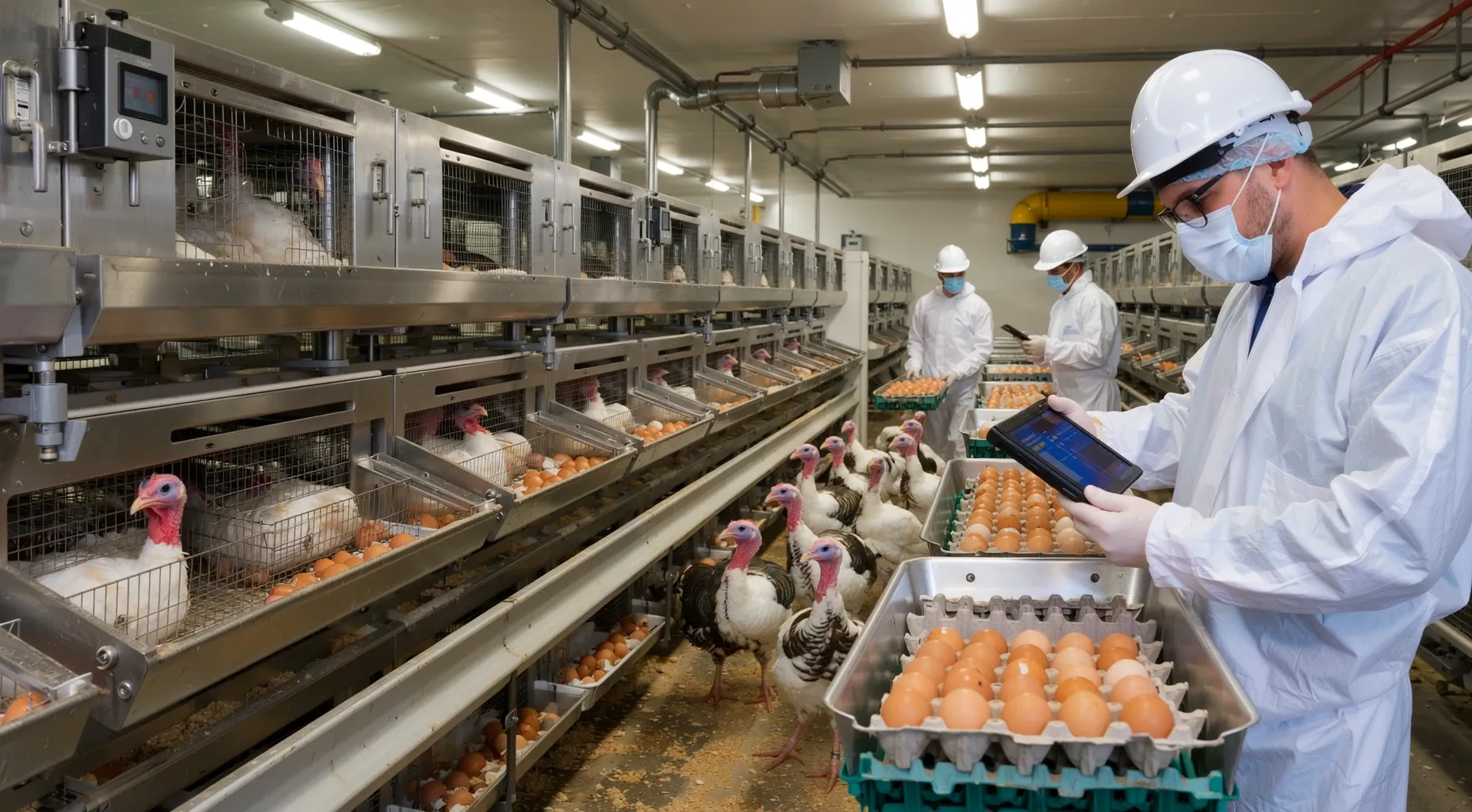
The turkey production sector encompasses establishments primarily dedicated to raising turkeys for human consumption, specifically targeting the meat and egg markets. This industry involves a complex cycle of breeding, hatchery management, intensive feeding, and housing management to ensure rapid growth and optimal body condition for market weight. Typical business activities include sourcing specialized poultry feed, maintaining high biosecurity standards to prevent disease, managing flock health through vaccination, and overseeing the transition from hatchery production to finishing operations before slaughter. Both large-scale commercial feedlots and smaller specialized family farms operate within this sector, reflecting a wide range of business models. These entities vary significantly in scale, with major multinational corporations managing millions of birds through automated systems while independent operators raise hundreds or thousands of flocks. The scope of operations extends from the initial incubation phase where embryos are developed into chicks, through the intensive rearing period in controlled environments, and finally to the collection and transport of live birds or processed carcasses to packers and distributors. Ultimately, turkey production serves as a critical component of the agricultural food supply, contributing substantial economic value through the poultry meat industry which remains a popular protein source globally.
Hierarchy
| Code | Title | Description |
|---|---|---|
| 11 | Agriculture, Forestry, Fishing and Hunting 2-digit sector | The Sector as a Whole The Agriculture, Forestry, Fishing and Hunting sector comprises establishments primarily engaged in growing crops, raising animals, harvesting timber, and harvesting fish and other animals from a farm, ranch, or their natural habitats. The establishments in this sector are often described as farms, ranches, dairies, greenhouses, nurseries, orchards, or hatcheries. A farm may consist of a single tract of land or a number of separate tracts which may be held under different tenures. For example, one tract may be owned by the farm operator and another rented. It may be operated by the operator alone or with the assistance of members of the household or hired employees, or it may be operated by a partnership, corporation, or other type of organization. When a landowner has one or more tenants, renters, croppers, or managers, the land operated by each is considered a farm. The sector distinguishes two basic activities: agricultural production and agricultural support activities. Agricultural production includes establishments performing the complete farm or ranch operation, such as farm owner-operators and tenant farm operators. Agricultural support activities include establishments that perform one or more activities associated with farm operation, such as soil preparation, planting, harvesting, and management, on a contract or fee basis. Excluded from the Agriculture, Forestry, Fishing and Hunting sector are establishments primarily engaged in agricultural research (e.g., experimental farms) and government establishments primarily engaged in administering programs for regulating and conserving land, mineral, wildlife, and forest use. These establishments are classified in Industry 54171, Research and Development in the Physical, Engineering, and Life Sciences; and Industry 92412, Administration of Conservation Programs, respectively. |
| 112 | Animal Production and Aquaculture 3-digit subsector | Industries in the Animal Production and Aquaculture subsector raise or fatten animals for the sale of animals or animal products and/or raise aquatic plants and animals in controlled or selected aquatic environments for the sale of aquatic plants, animals, or their products. The subsector includes establishments, such as ranches, farms, and feedlots, primarily engaged in keeping, grazing, breeding, or feeding animals. These animals are kept for the products they produce or for eventual sale. The animals are generally raised in various environments, from total confinement or captivity to feeding on an open range pasture. The industries in this subsector are grouped by important factors, such as suitable grazing or pasture land, specialized buildings, type of equipment, and the amount and types of labor required. Establishments are classified in the Animal Production and Aquaculture subsector when animal production (i.e., value of animals for market) accounts for one-half or more of the establishment's total agricultural production. Establishments with one-half or more animal production with no one animal product or family of animal products of an industry accounting for one-half of the establishment's agricultural production are treated as combination animal farming classified in Industry 11299, All Other Animal Production. |
| 1123 | Poultry and Egg Production 4-digit industry group | This industry group comprises establishments primarily engaged in breeding, hatching, and raising poultry for meat or egg production. |
| 11233 | Turkey Production 5-digit NAICS industry | See industry description for 112330. |
| 112330 | Turkey Production 6-digit U.S. detail | The turkey production sector encompasses establishments primarily dedicated to raising turkeys for human consumption, specifically targeting the meat and egg markets. This industry involves a complex cycle of breeding, hatchery management, intensive feeding, and housing management to ensure rapid growth and optimal body condition for market weight. Typical business activities include sourcing specialized poultry feed, maintaining high biosecurity standards to prevent disease, managing flock health through vaccination, and overseeing the transition from hatchery production to finishing operations before slaughter. Both large-scale commercial feedlots and smaller specialized family farms operate within this sector, reflecting a wide range of business models. These entities vary significantly in scale, with major multinational corporations managing millions of birds through automated systems while independent operators raise hundreds or thousands of flocks. The scope of operations extends from the initial incubation phase where embryos are developed into chicks, through the intensive rearing period in controlled environments, and finally to the collection and transport of live birds or processed carcasses to packers and distributors. Ultimately, turkey production serves as a critical component of the agricultural food supply, contributing substantial economic value through the poultry meat industry which remains a popular protein source globally. |
Need a supply chain stack that maps to this industry?
Use this NAICS classification as the starting point, then connect it to Item workflows across inventory, warehousing, order management, fulfillment, and transportation.
Index Items
Egg production, turkey
Turkey egg production
Turkey production
How Item Can Help
Item.com's Warehouse Management System optimizes inventory storage for perishable turkey products by tracking batch dates and expiration limits to prevent waste. It streamlines pick-and-pack operations to ensure fresh cuts and whole birds are dispatched quickly during peak demand seasons.
The Order Management System unifies sales channels to coordinate turkey deliveries across regional butchers and foodservice clients simultaneously. It enables real-time order prioritization and automated routing, reducing lead times for time-sensitive fresh orders.
Transportation Management Software ensures consistent cold chain integrity for turkey shipments by monitoring temperature throughout the delivery route. It provides logistics planners with visibility into carrier performance, allowing for rapid rerouting if conditions threaten product freshness.
Item.com Tools
External Resources
Census.gov NAICS Detail
Official US Census Bureau definition and scope for NAICS 112330.
National Turkey Producers Association
Official industry trade association providing market data and news for US turkey producers.
United States Department of Agriculture Agricultural Market Reports
Government resource offering weekly price and supply reports for turkey production and marketing.
National Cattlemen's Beef Association
Industry directory and resource hub for agricultural production including turkey segments and supply chain data.
